

Mirror Work Basics: Understanding Rajasthani Embroidery
Learn the history and techniques behind traditional mirror embroidery. Covers different stitch types, mirror cutting methods, and regional variations across Rajasthan.
Master the art of hanging and positioning Rajasthani mirror textiles for maximum visual impact and balance in your bedroom space.

Author
Editorial Team
Written by the Aaina Textiles editorial team, focused on authentic Rajasthani textiles, mirror work techniques, and practical bedroom styling guidance.
Mirror work isn’t just about hanging it on a wall. It’s about creating visual balance and letting those tiny reflective pieces catch light throughout your room. The right placement can transform your bedroom from ordinary to stunning.
Whether you’re working with a small accent piece or a large statement textile, the principles remain the same. You’ll need to think about wall dimensions, lighting, furniture placement, and how the mirrors will interact with natural light during different times of day. Get this right, and you’ve got something that looks professionally designed.

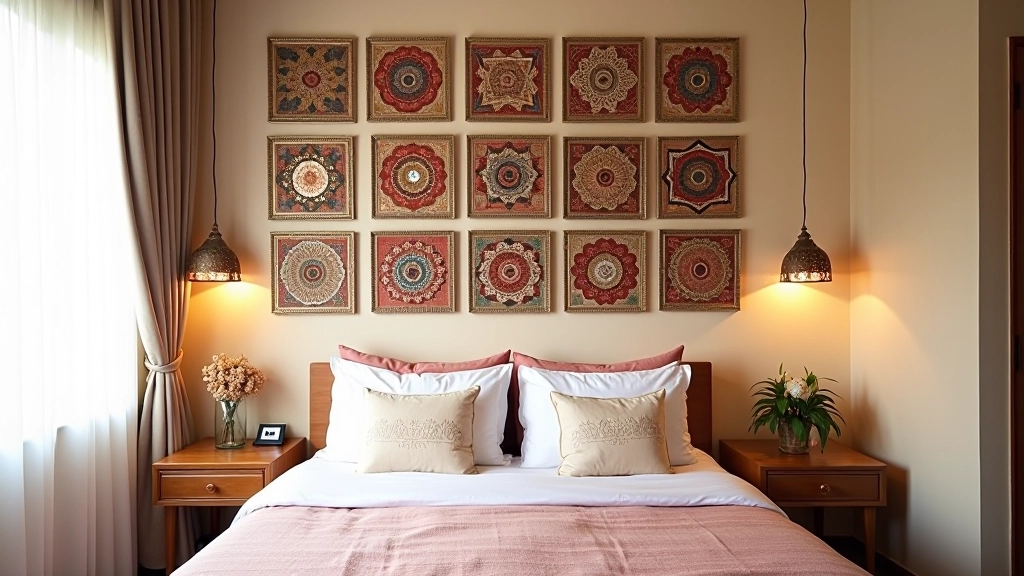
The space between pieces matters as much as the pieces themselves. If you’re hanging multiple textiles, aim for consistent gaps — about 15-20 cm between frames or pieces works well for most bedrooms. This creates rhythm and prevents the wall from looking cluttered.
For a single large piece, it should sit comfortably without dominating the entire wall. Leave at least 30 cm of space on each side. Think of it this way: your mirror work should be the focal point, but it shouldn’t feel like it’s fighting for attention with the rest of your room.
Quick spacing rule: If you can comfortably fit your hand between two pieces, you’ve got the right distance. Too close feels cramped. Too far feels disconnected.
One of the most common mistakes people make is hanging artwork too high. Your eye level when standing in the bedroom should align roughly with the center of the piece. In most cases, this means the center should sit about 152-157 cm from the floor.
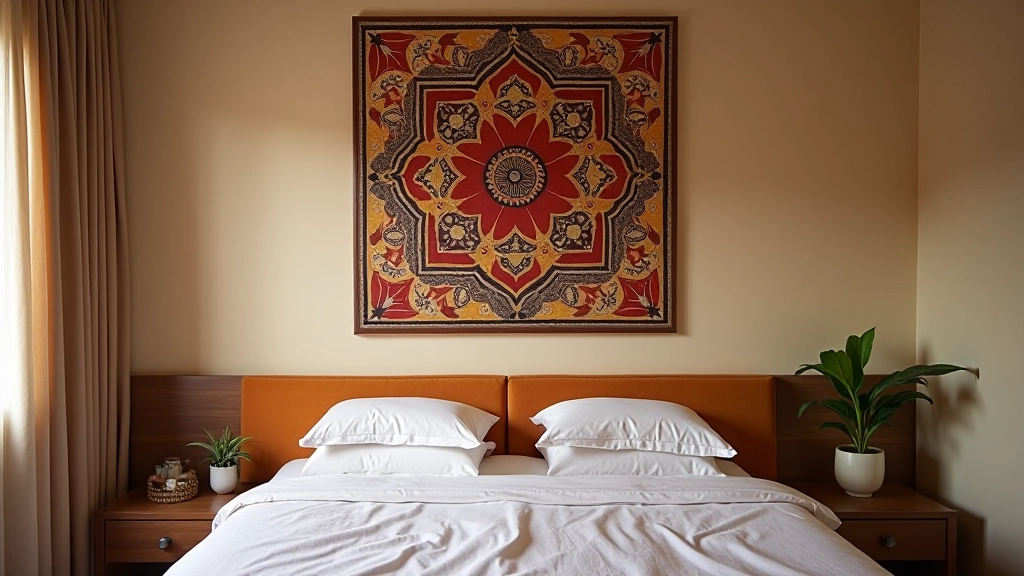
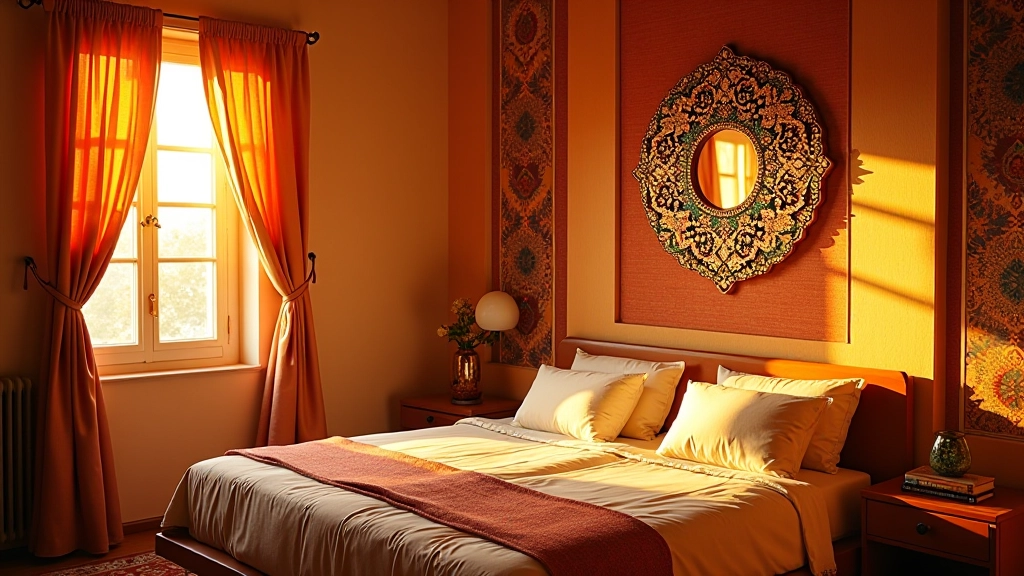
But here’s the thing — if your piece hangs above a bed, the rules shift slightly. You want it centered on the wall space, not centered on eye level. Mount it so there’s about 25-30 cm of clearance above the headboard or bed frame. This prevents it from looking cramped and allows the mirrors to reflect light without obstruction.
These guidelines are based on standard bedroom layouts and proportions. Your specific installation may vary depending on wall material, ceiling height, furniture size, and personal preference. Always use appropriate hardware for your wall type, and if you’re unsure about weight capacity, consult with a professional installer. Mirror work pieces can be heavier than expected due to the glass and embroidery materials.
Not all bedrooms are created equal. Some have cozy wall nooks, others have expansive surfaces. The key is matching your mirror work to the available space.
For small walls (under 2 meters wide), a single focused piece works best. You don’t want the textile competing with wall space — let it breathe. For medium walls (2-3 meters), you can do a larger single piece or create a pair of matching textiles. Large walls (over 3 meters) give you freedom to create galleries or use statement-sized pieces.
The golden rule: Your mirror work should occupy about 40-60% of the available wall space. More than that feels overwhelming. Less than that looks lonely. This proportion creates that balanced, intentional look.
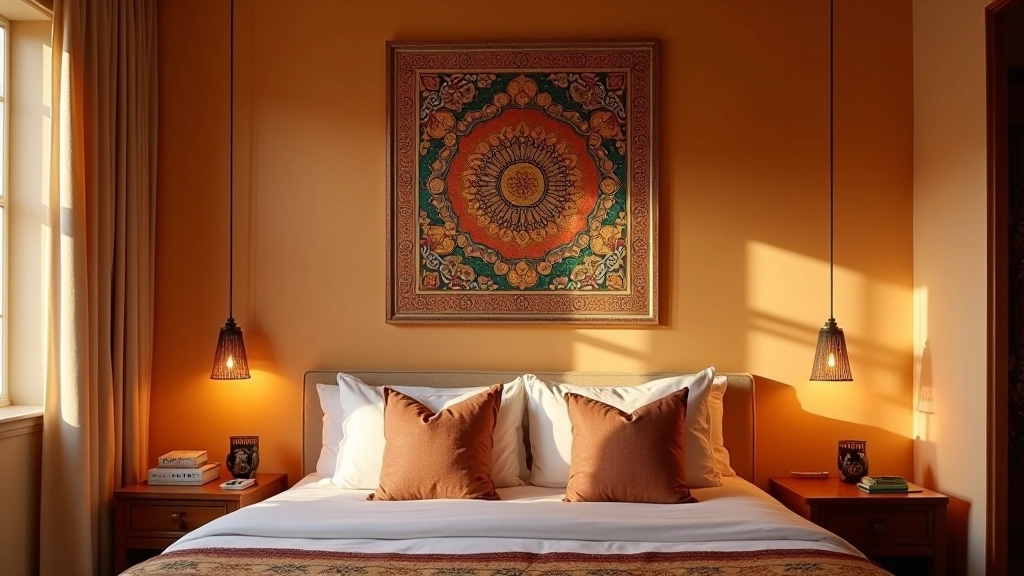
This is where mirror work really shines — literally. Those embedded mirrors catch and reflect light, creating movement and sparkle throughout your room. Position your piece where it’ll catch natural light from windows during the day. If your bedroom gets morning sun, that eastern wall could be perfect. Evening light? Consider the western exposure.
Artificial light matters too. Bedside lamps, ceiling fixtures, or even a small accent light pointed toward the textile will activate the mirrors. You’ll notice the reflections change subtly as light moves — it’s one of the reasons mirror work is so dynamic compared to flat artwork.
Pro tip: Avoid placing mirror work directly opposite strong light sources that might create harsh glare. Angled placement typically works better than head-on positioning.
Learn the history and techniques behind traditional mirror embroidery. Covers different stitch types, mirror cutting methods, and regional variations across Rajasthan.

A guide to selecting textile colors and patterns that complement existing bedroom décor. Learn how different hues work with various interior styles.

Keep your pieces looking fresh. Covers gentle cleaning methods, storage tips, and how to protect mirror work from dust and fading.
Hanging Rajasthani mirror work is more art than science, but understanding these guidelines gives you a solid foundation. Start with the measurements we’ve covered, then trust your eye. Step back regularly as you’re installing — sometimes what looks right up close needs adjustment from across the room.
The beauty of mirror work is that it’ll reward thoughtful placement. When you get it right, those tiny glass pieces become part of your bedroom’s personality, catching light and creating moments of sparkle throughout the day. That’s worth taking the time to get placement right.